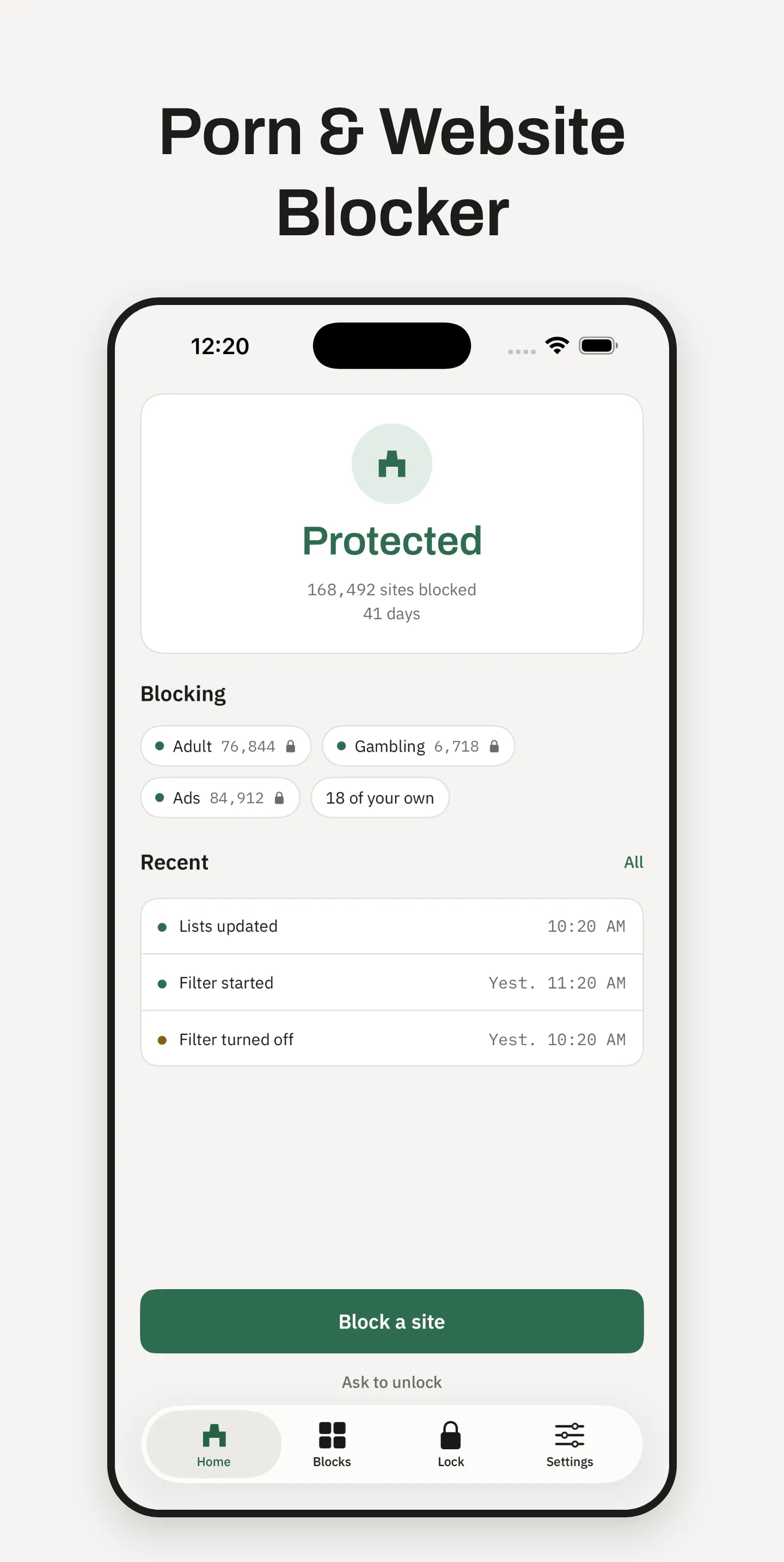
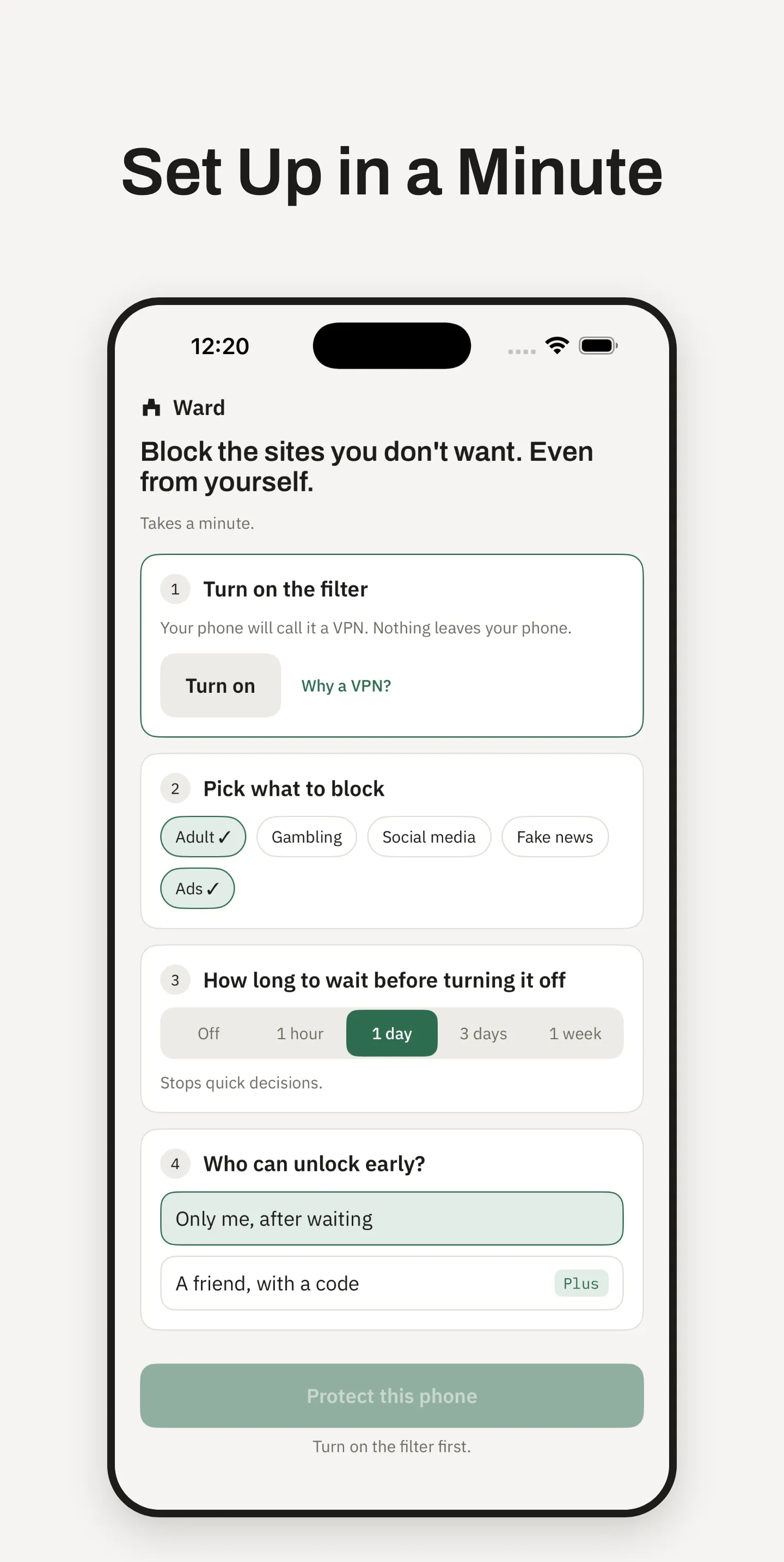
Ward blocks the sites you don’t want. Even from yourself.
The blocking part is the easy part; every blocker does it. What most of them get wrong is the ten seconds after you decide to turn it off. Ward is built around those ten seconds.
Pick what to block, turn it on, done
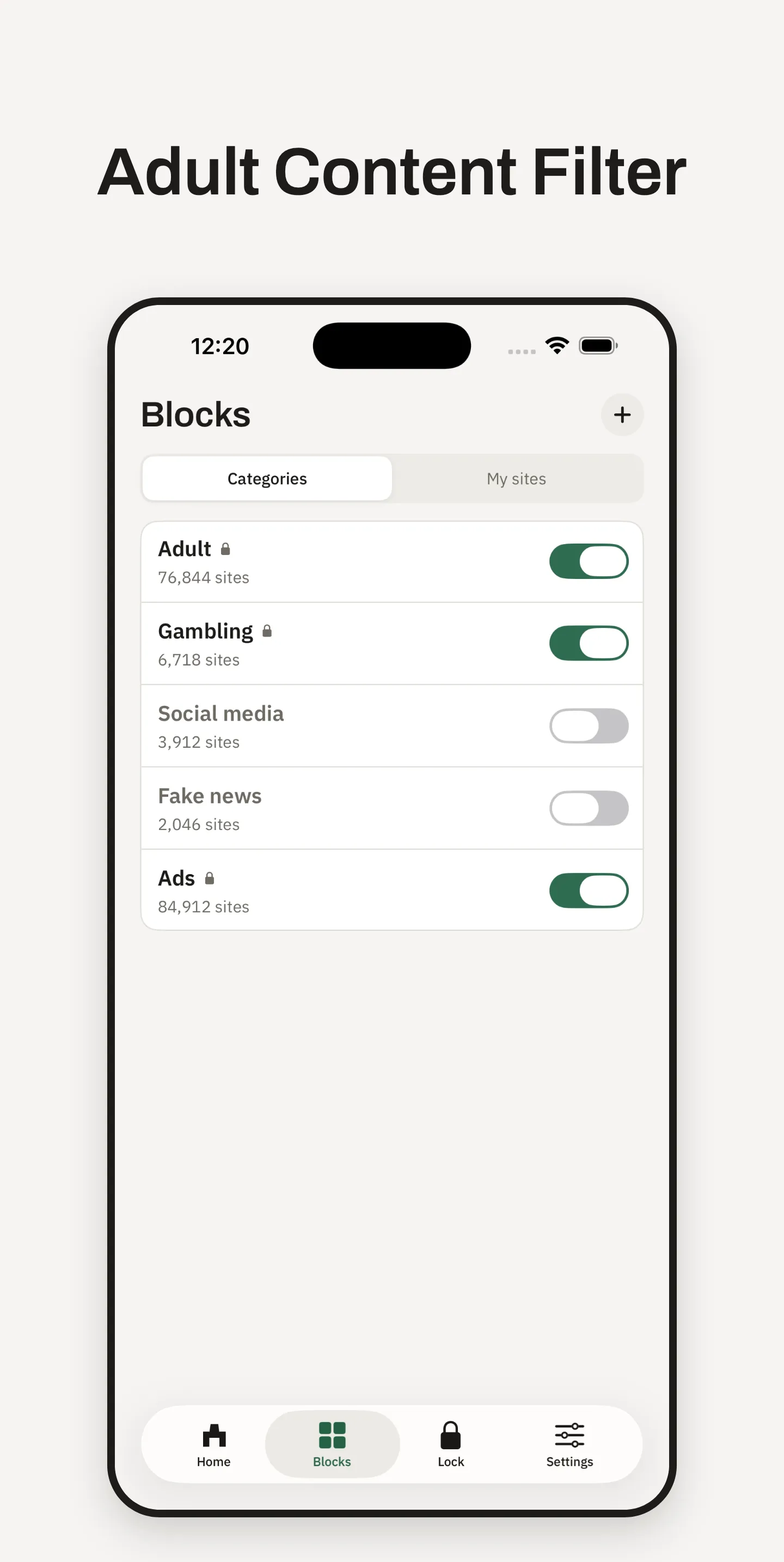
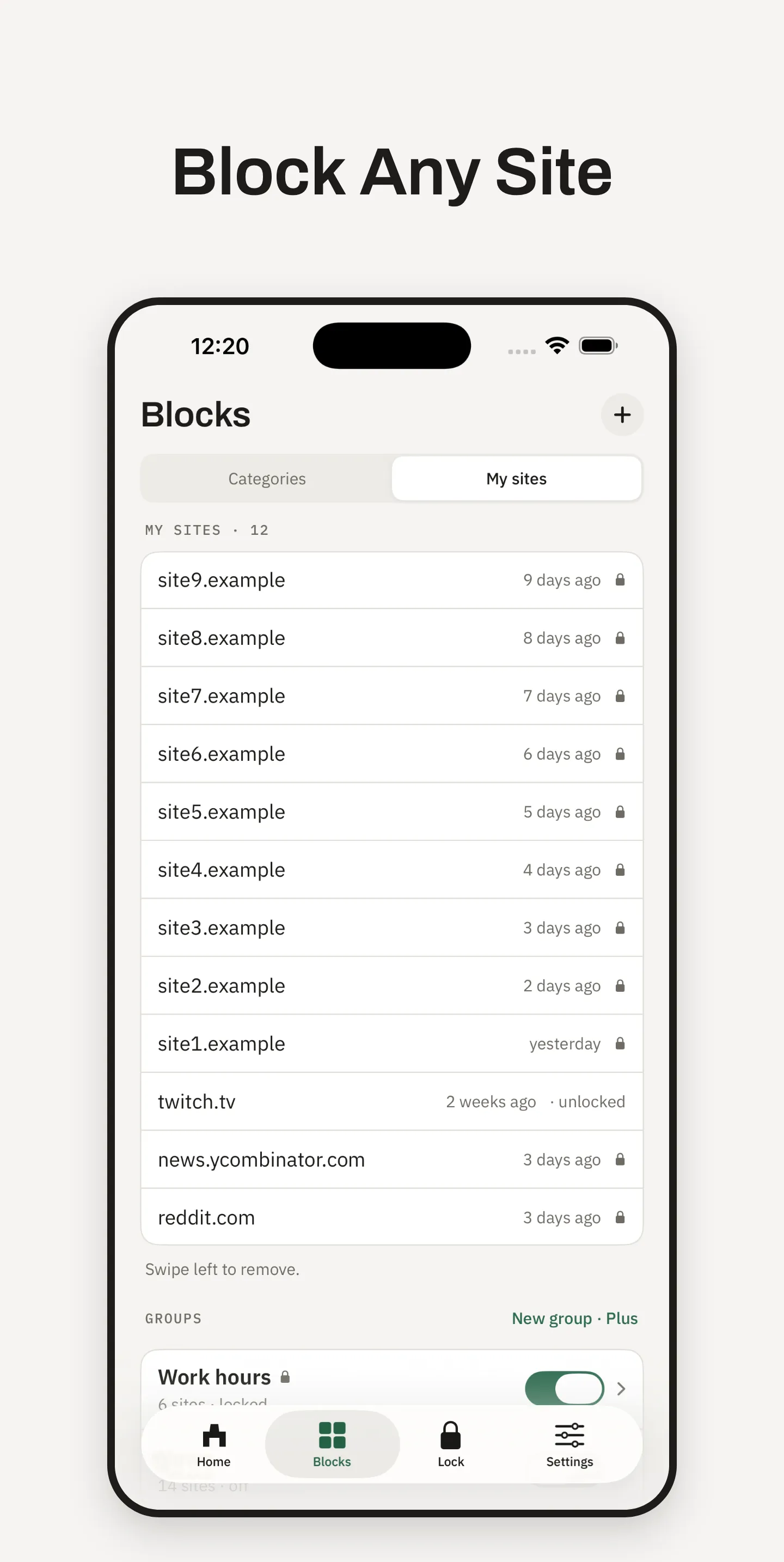
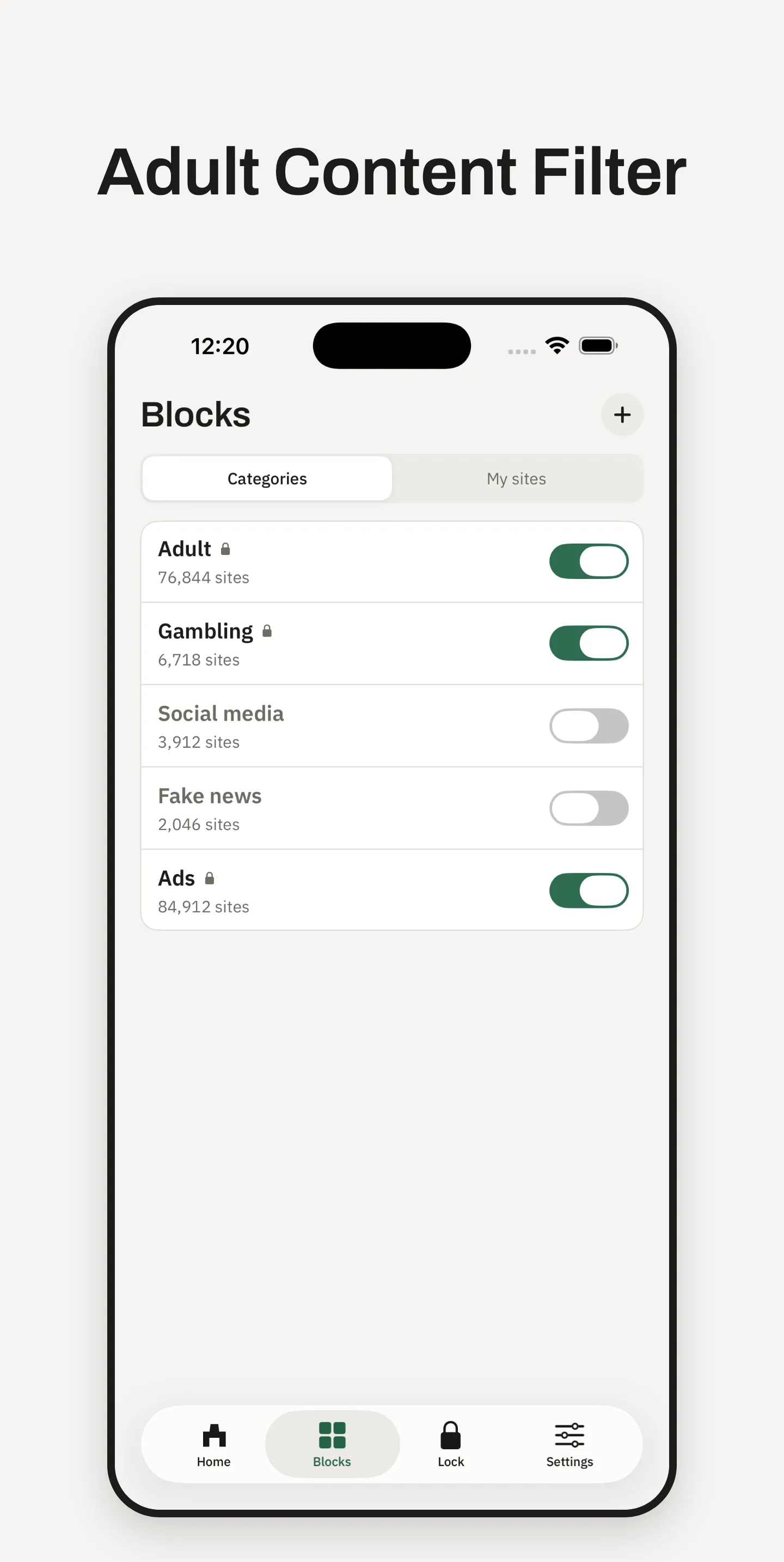
Five categories, one switch each: adult sites, gambling, social media, fake news, and ads and malware. The lists come from the open-source StevenBlack/hosts project, about 150,000 sites, refreshed daily. Add your own sites on top, and mark the ones that should always work.
Works in every app and browser
Ward filters name lookups, not a browser. A blocked site stays blocked in an incognito tab, in a second browser, inside a social app’s web view, and in any app installed later. There is no extension to disable and no browser to switch to.
The lock
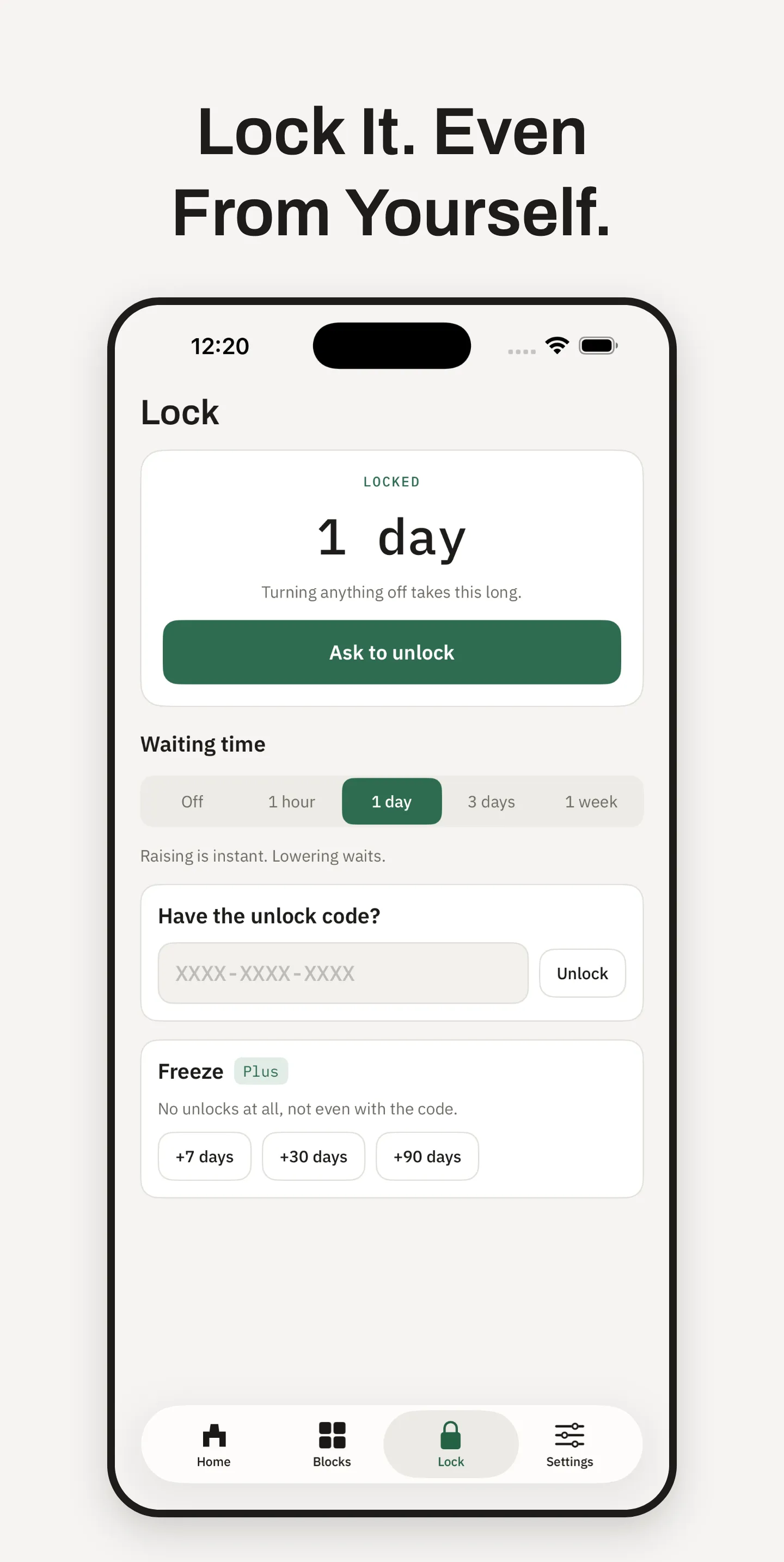
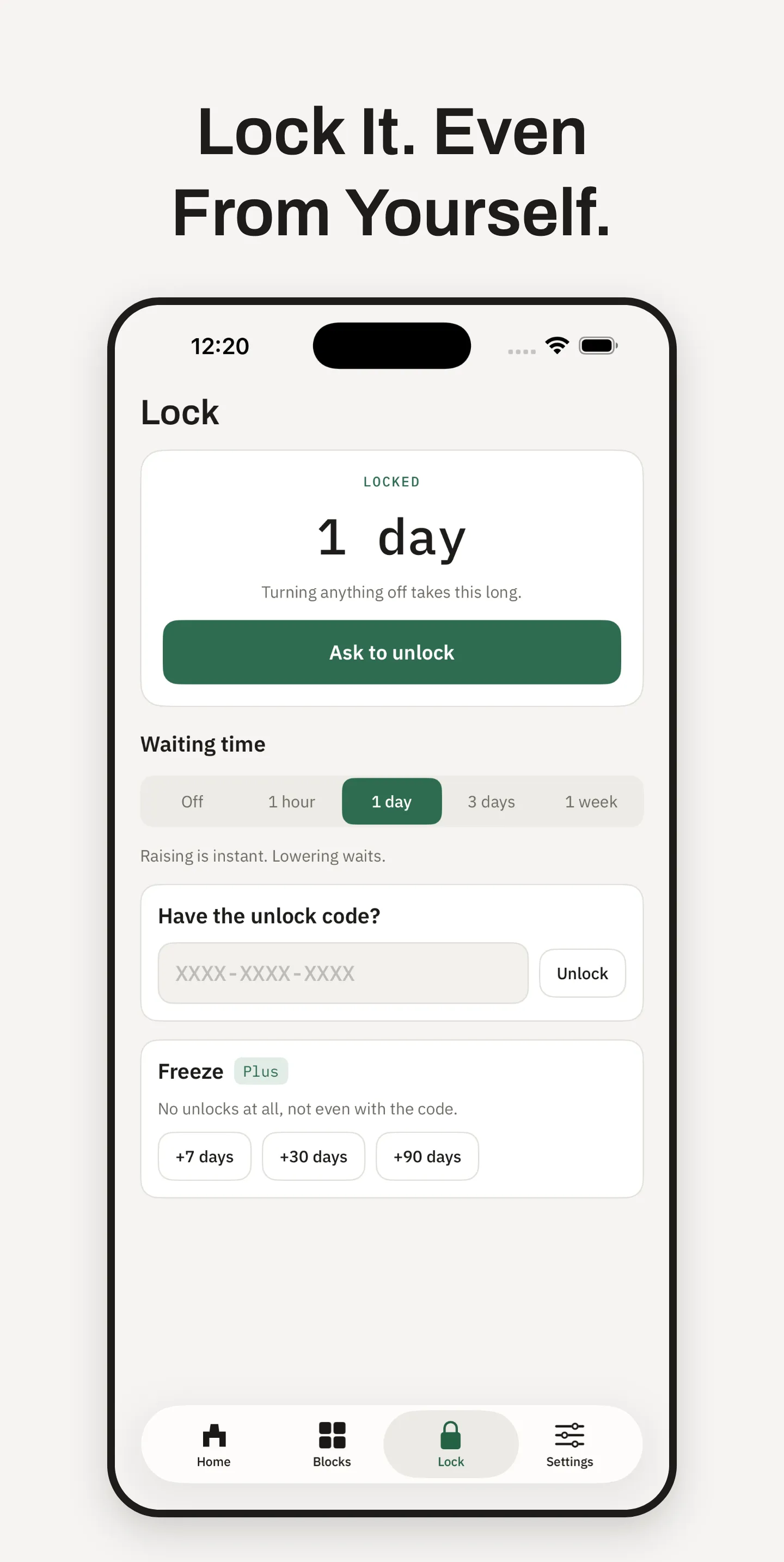
Turning anything off takes a waiting time you set in advance, from one hour to one week. Ask at 2 a.m., and the answer arrives tomorrow. Give the unlock code to a friend and only they can open it early. Freeze for 7, 30 or 90 days when you want the question closed for a while.
Nothing leaves your phone
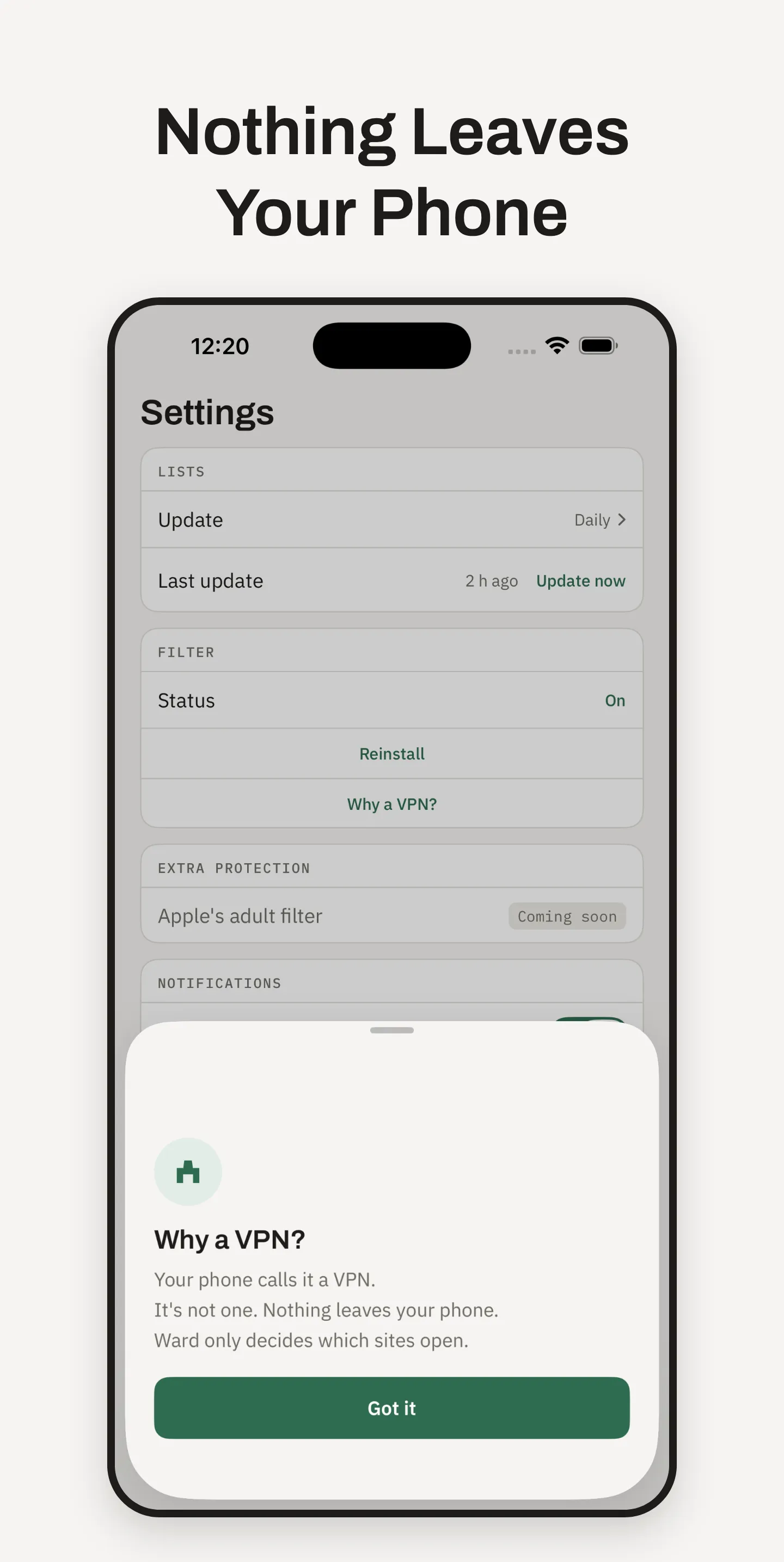
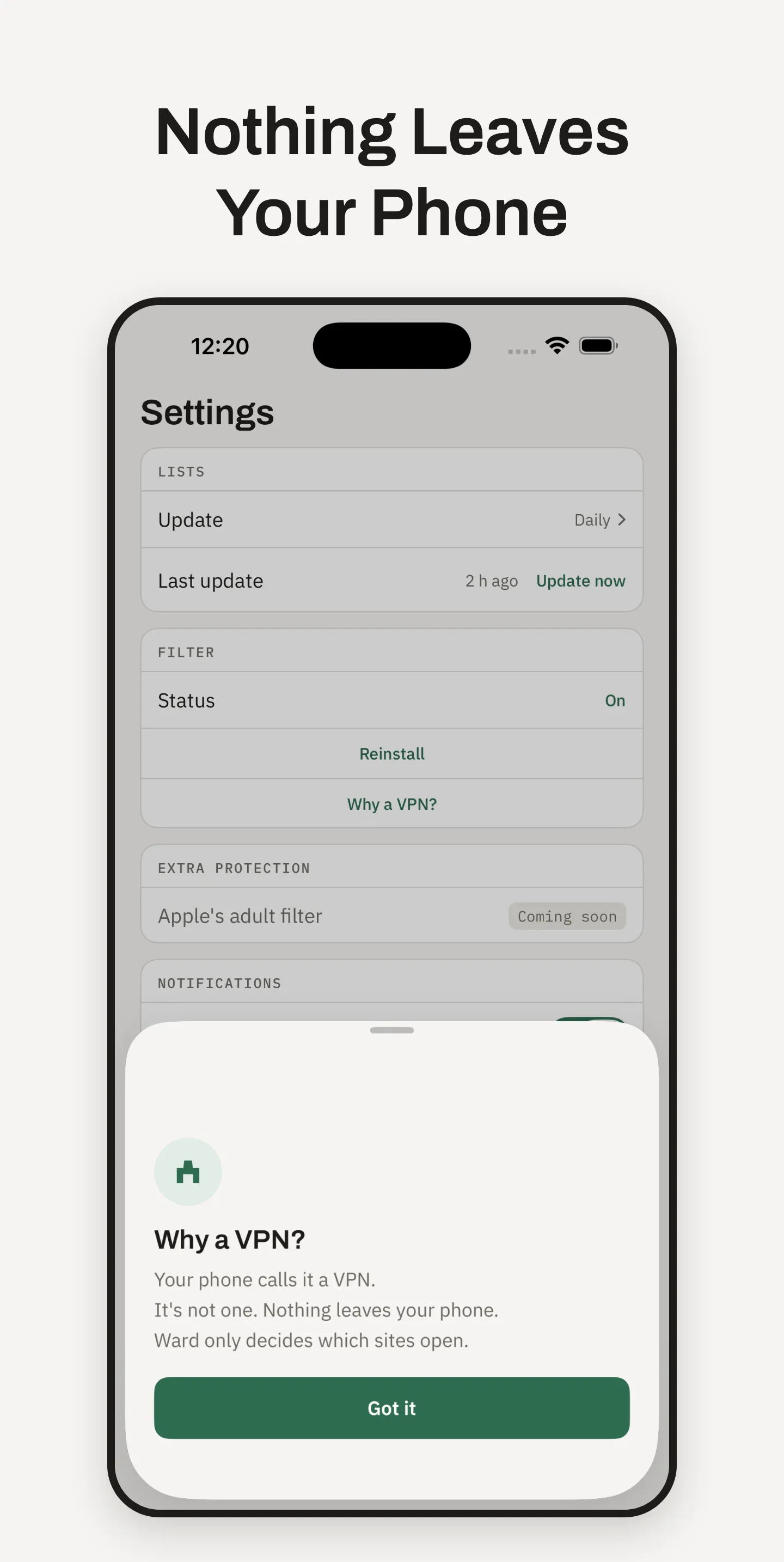
The system calls the filter a VPN because that is the only door the operating system offers for seeing name lookups. Ward walks through that door and nothing else: no traffic is sent anywhere, no server exists, no history of what you visit is kept. Only two counters live on the phone, lookups answered and lookups blocked.
Free and Plus
Free blocks everything: all five categories, your own sites, a waiting time up to one day. Ward Plus is one purchase that works on every platform and adds the friend’s unlock code, Freeze, the one-week wait, and groups of sites with import and export. There is no quiz, no account, and no fee to remove the app. Removing Ward only ever costs the waiting time.
Native on both phones, desktop next
Ward is Swift and SwiftUI on iPhone (a Network Extension packet tunnel that speaks only DNS) and Kotlin with Jetpack Compose on Android (a DNS-only VpnService). Both share the same lock engine, the same lists and the same 16 translations. A desktop version for Windows, macOS and Linux, which guards the system hosts file with a root helper, is built and in testing. The post about building it covers why it is not a real VPN and what that ruled out.