

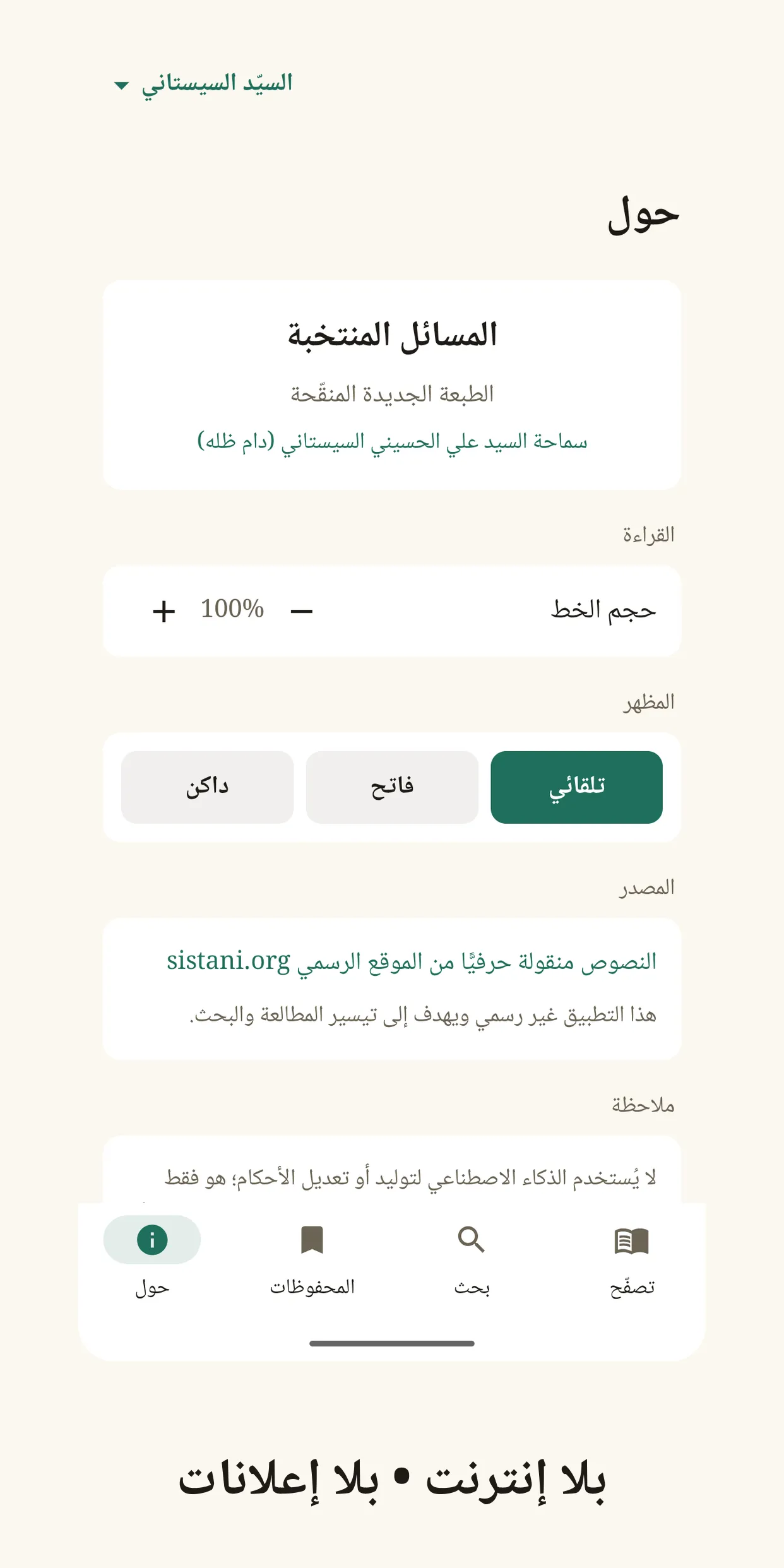
Looking up a ruling on a phone usually means a PDF scan, a website that needs a connection, or a forum thread quoting someone who half-remembers the text. For matters of religious practice, half-remembered is not good enough. Marjai (مرجعي, “my marjaʿ”) puts the actual book on the phone — every ruling reproduced letter for letter from the official source — and stays out of the way.
The complete al-Masāʾil al-Muntakhaba
All 26 chapters, 200 sections and 1,463 numbered rulings of Sayyid Ali al-Sistani’s practical treatise: purity, prayer, fasting, khums, zakat, hajj, transactions, marriage, inheritance, and the modern questions at the end. Organised exactly as the printed book, with the source credited in the app.
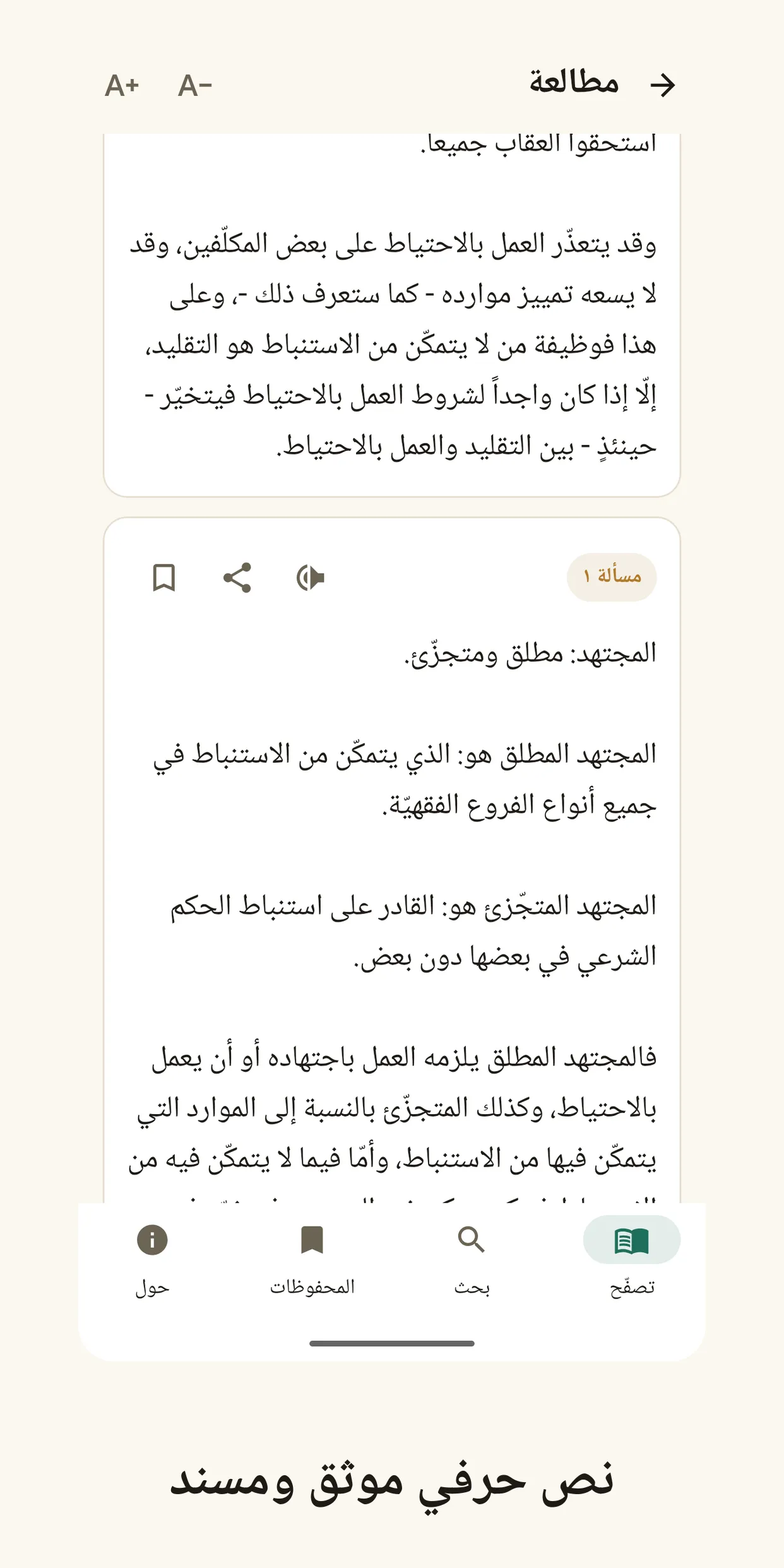
The text was scraped from sistani.org and then validated against it: a script confirms that every ruling’s text equals the raw page text and every number matches the source markers, with zero mismatches and zero empties. Two quirks in the original — a numbering typo in one section, and a chapter whose numbering restarts — were deliberately kept, because a reader that “corrects” its source is no longer a faithful reader.
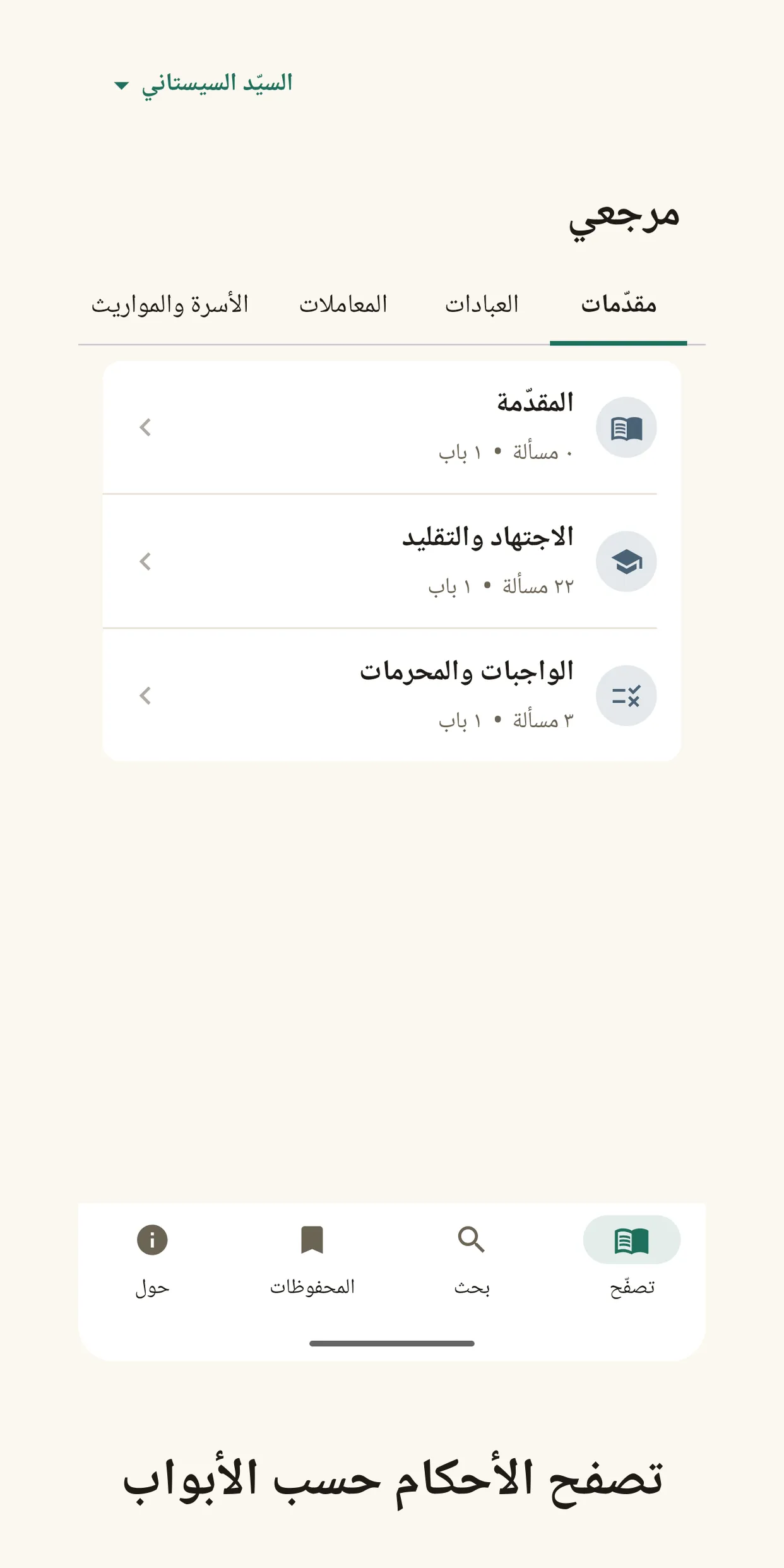
Browse the way the book is organised
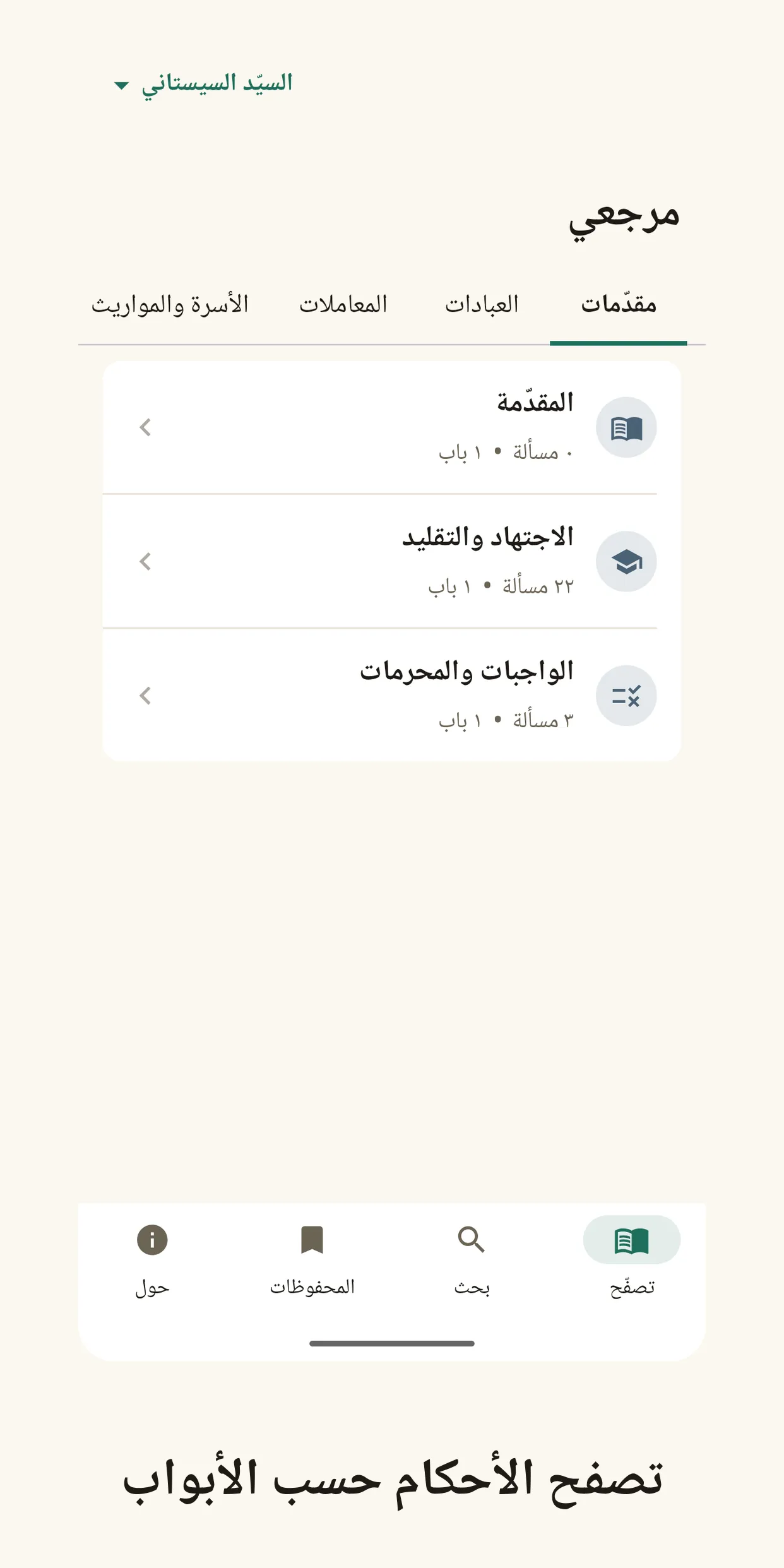
Six thematic tabs group the chapters — introductions, acts of worship, transactions, family and inheritance, food and oaths, new questions — each drilling down from chapter to section to ruling. Chapters carry a small icon tinted by domain so you can find your place by shape and colour, not just by reading titles.
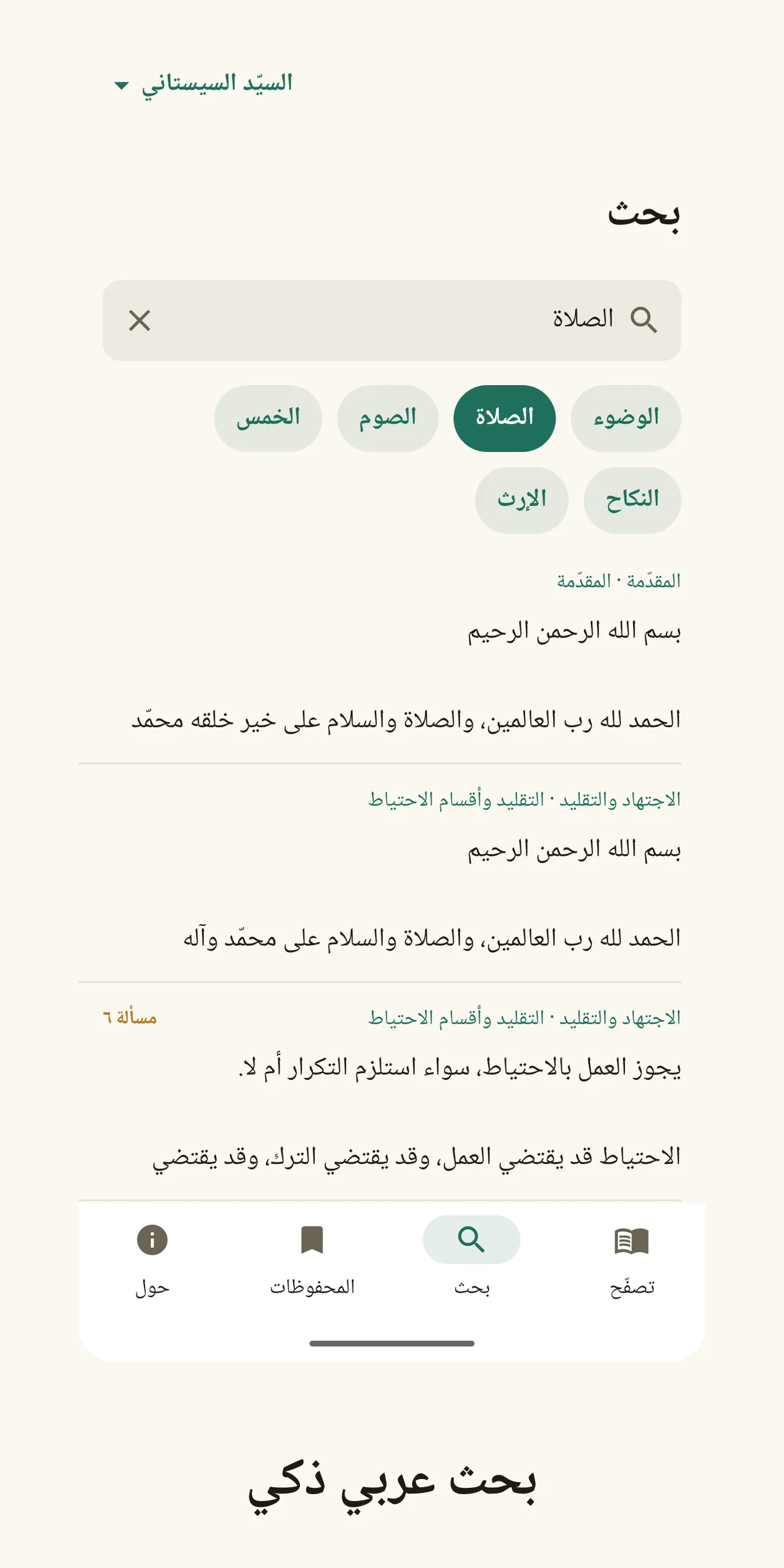
Arabic search that forgives your spelling
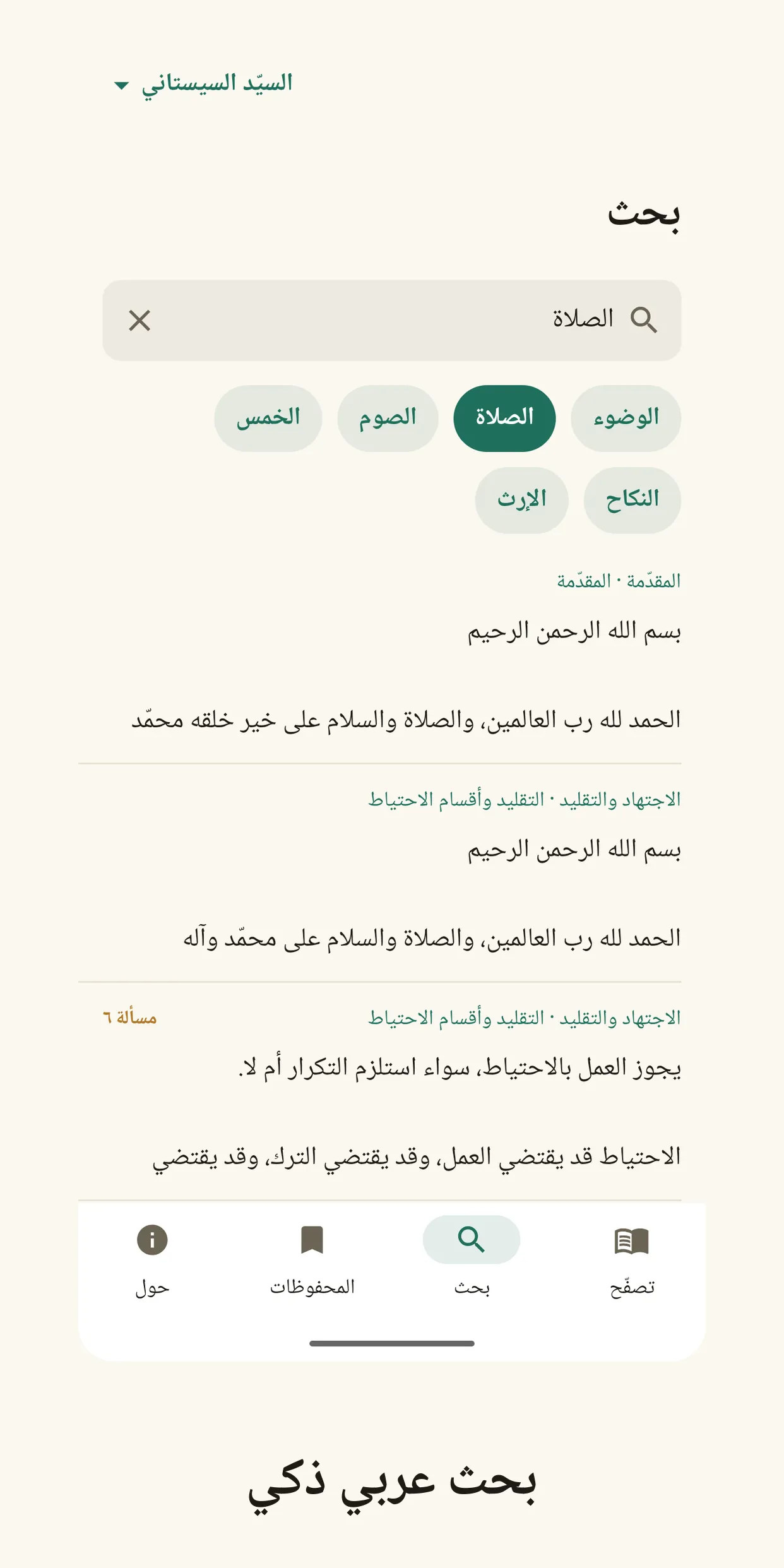
Type with or without tashkīl, with any hamza or alef form, and the same rulings come back. Every ruling is indexed in a normalised form so الصلاه finds الصَّلاة. Filter chips for the common topics — purity, prayer, fasting, khums, marriage, inheritance — get you to a chapter in one tap.
Built for reading Arabic
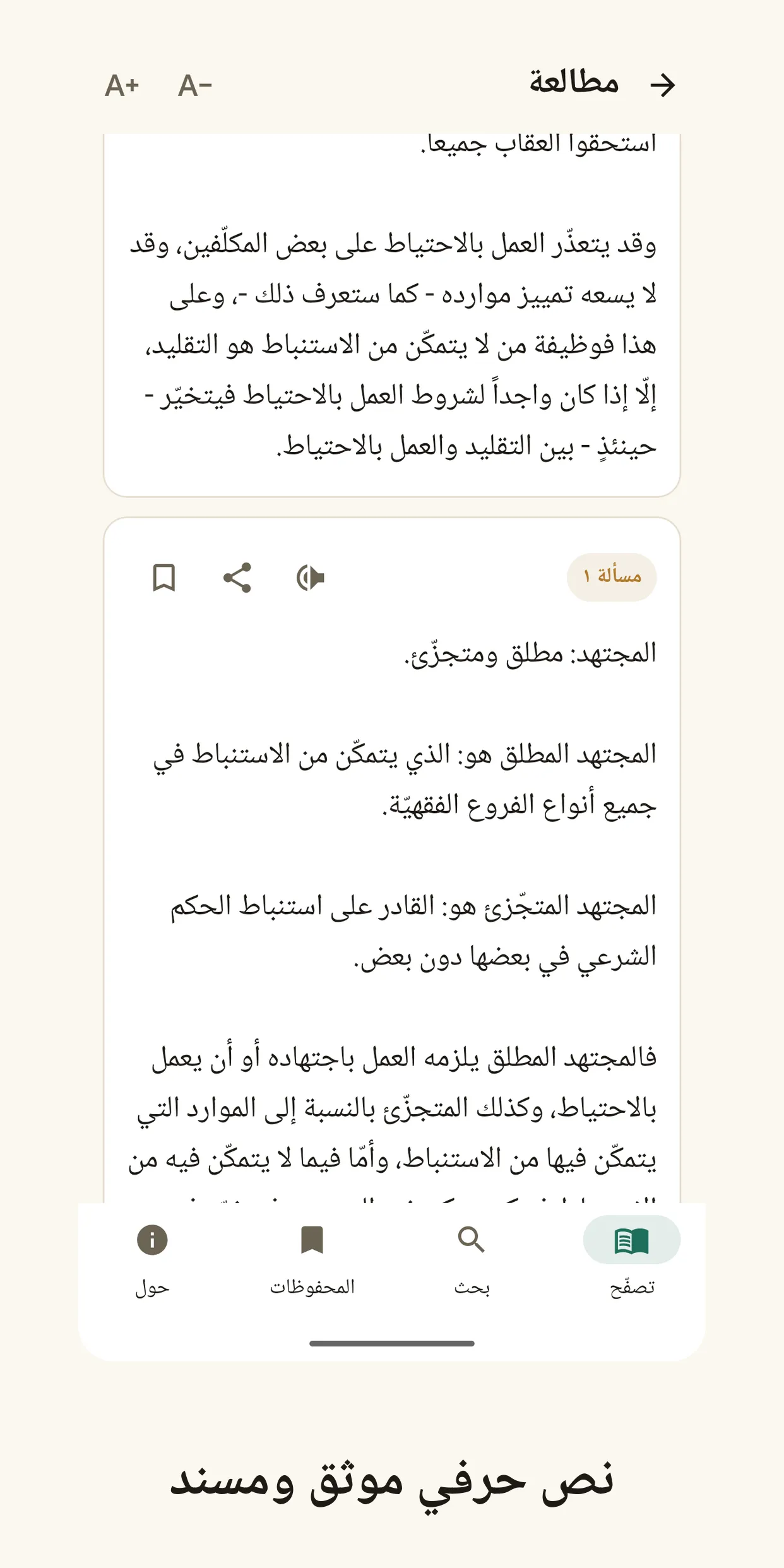
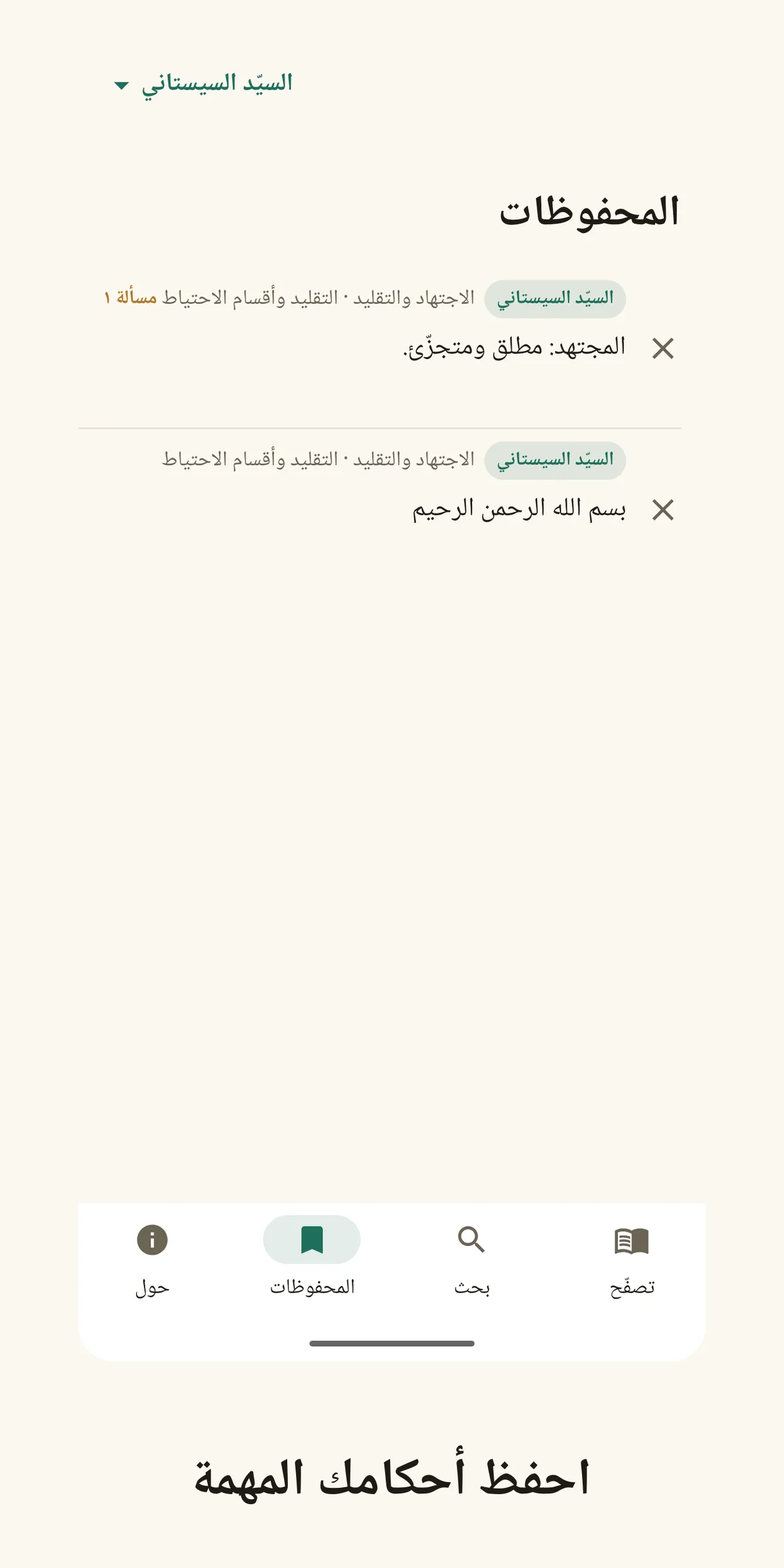
Full right-to-left layout, one typeface everywhere — Amiri, a Naskh face designed for exactly this kind of text — adjustable size, and light, dark or automatic themes. Any ruling can be bookmarked, copied or shared, and a shared ruling carries its attribution with it.
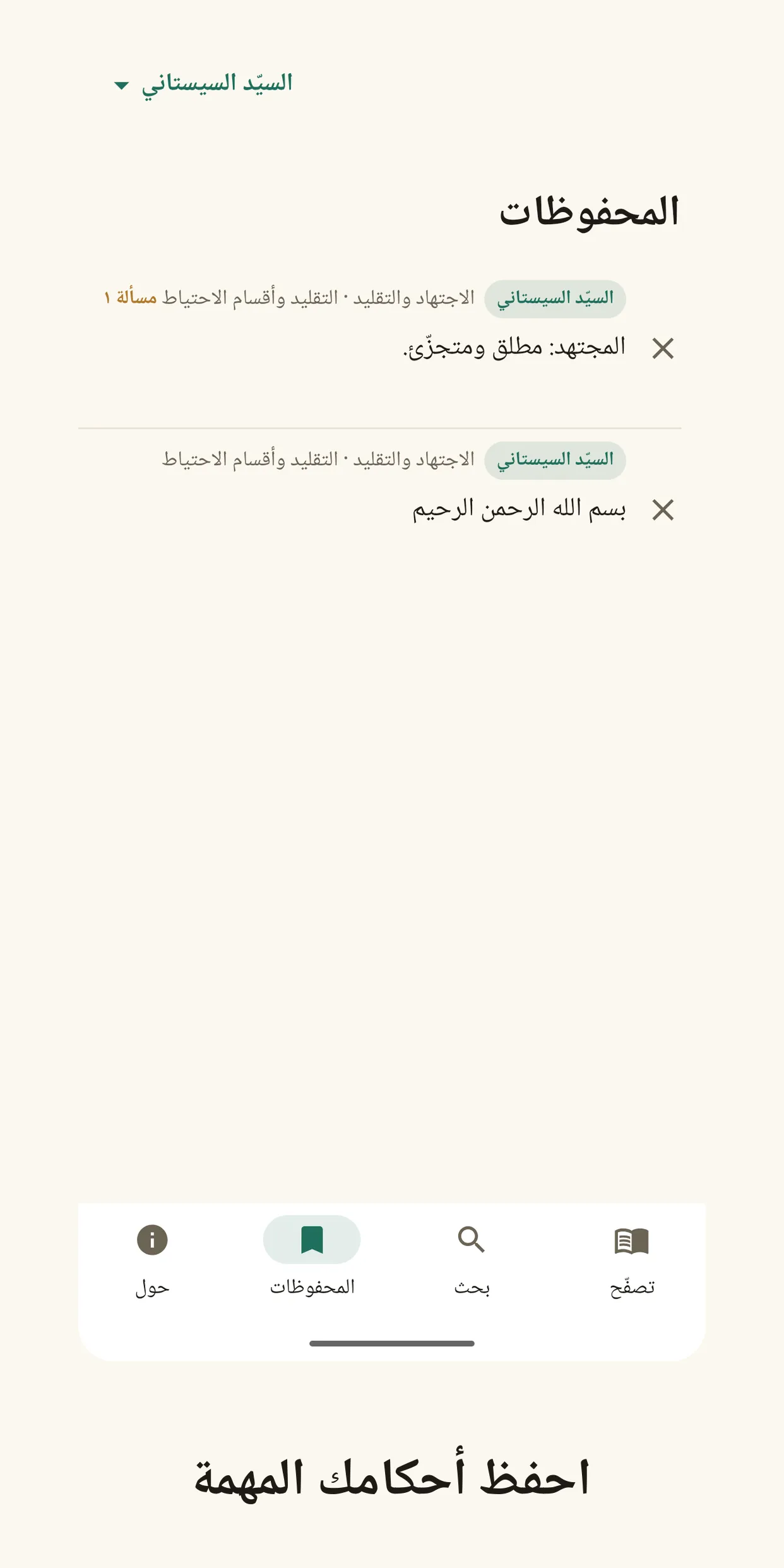
No AI, no server, no ads
Marjai does not generate, summarise or paraphrase anything. There is no account, no analytics, no network call after install. It is free and will stay free: the text belongs to its author and the app is a reading aid, not a product built on top of it. For matters of taqlid, precaution or new circumstances, the app tells you to refer to your marjaʿ’s office — which is what the book says too.
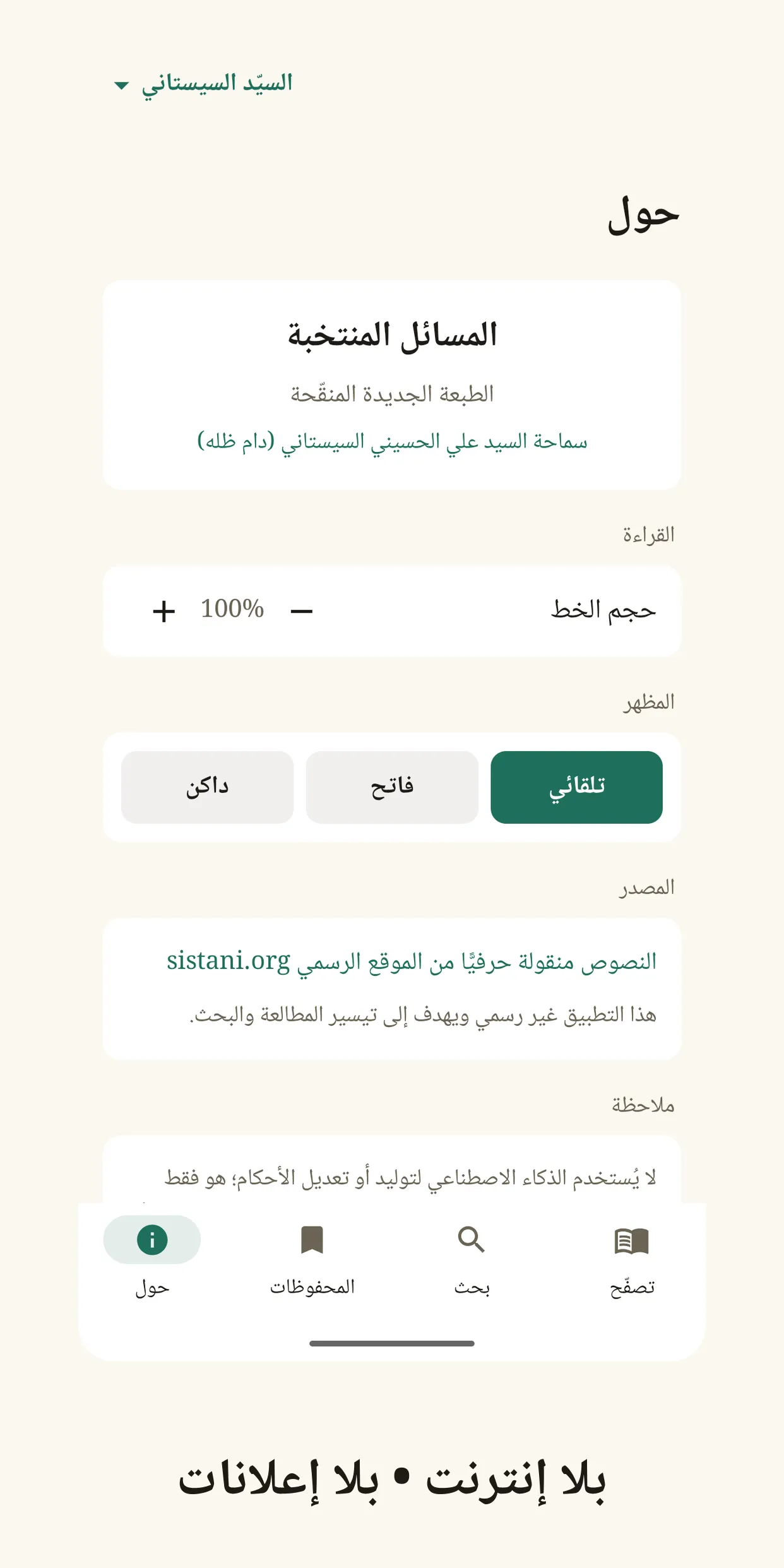
One codebase, two stores
Marjai is written once in Kotlin Multiplatform with Compose Multiplatform and ships natively to iOS and Android. The post about building it covers the scraping, the validation, the Arabic normalisation and why the app is Arabic-only.